Kids Creative Learning Lab
Overview
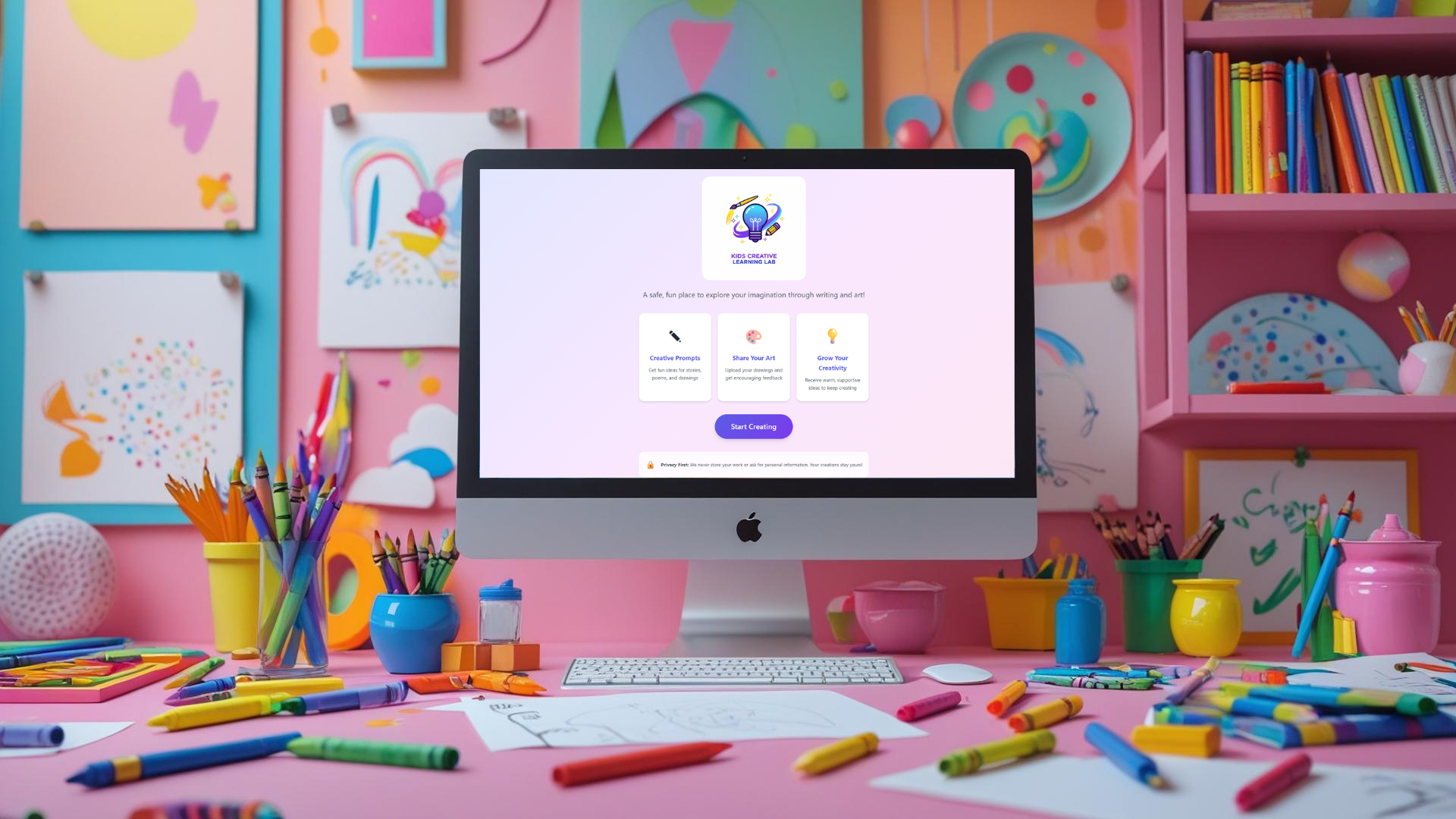
Kids Creative Learning Lab is a creative learning web app designed to support children’s writing and art through prompts, exploration, and encouragement rather than grading or performance. The app allows children to generate age-appropriate writing and art prompts, respond in the way that feels most comfortable to them, and receive supportive feedback that highlights effort, imagination, and curiosity. Rather than telling children what is right or wrong, the experience is designed to help them feel safe sharing ideas and experimenting creatively.
This project was created as a concept to MVP build to explore how AI can be used ethically in children’s learning spaces, especially in ways that complement educators and caregivers rather than replace them. Throughout the design and development process, I prioritized simplicity, emotional safety, and transparency, making sure the interface remained approachable for children while also clearly communicating privacy and intent to adults. Kids Creative Learning Lab reflects my interest in human centered learning tools, creative expression, and responsible AI design, and it serves as a foundation for future iteration informed by real user feedback.
The Problem
Many digital learning tools designed for children place a strong emphasis on performance, correctness, and measurable outcomes. These tools often rely on quizzes, scores, rankings, or automated evaluations that can unintentionally discourage creativity and increase pressure, especially for children who learn best through exploration, play, or visual and expressive methods. When creativity is treated as something to be measured rather than explored, children may become hesitant to take risks or share ideas that feel unfinished or uncertain.
In addition, many AI driven learning tools focus on efficiency and output while overlooking emotional safety, privacy, and developmental appropriateness. Feedback is frequently framed in ways that feel corrective or comparative, and personal data is often collected without clear explanation or necessity. For children, and for the adults who support them, this creates a lack of trust and raises concerns about how learning experiences are shaped by technology. There is a need for learning tools that support creative expression without judgment, respect children’s privacy, and use AI in ways that encourage curiosity and confidence rather than performance and comparison.
Goals and Design Principles
The primary goal of Kids Creative Learning Lab was to create a space where children could explore writing and art without fear of being evaluated or compared. I wanted the experience to feel inviting and low pressure, allowing children to engage creatively at their own pace and in their own way. Creativity needed to be the focus rather than outcomes, and the app needed to encourage participation without requiring perfection or completion.
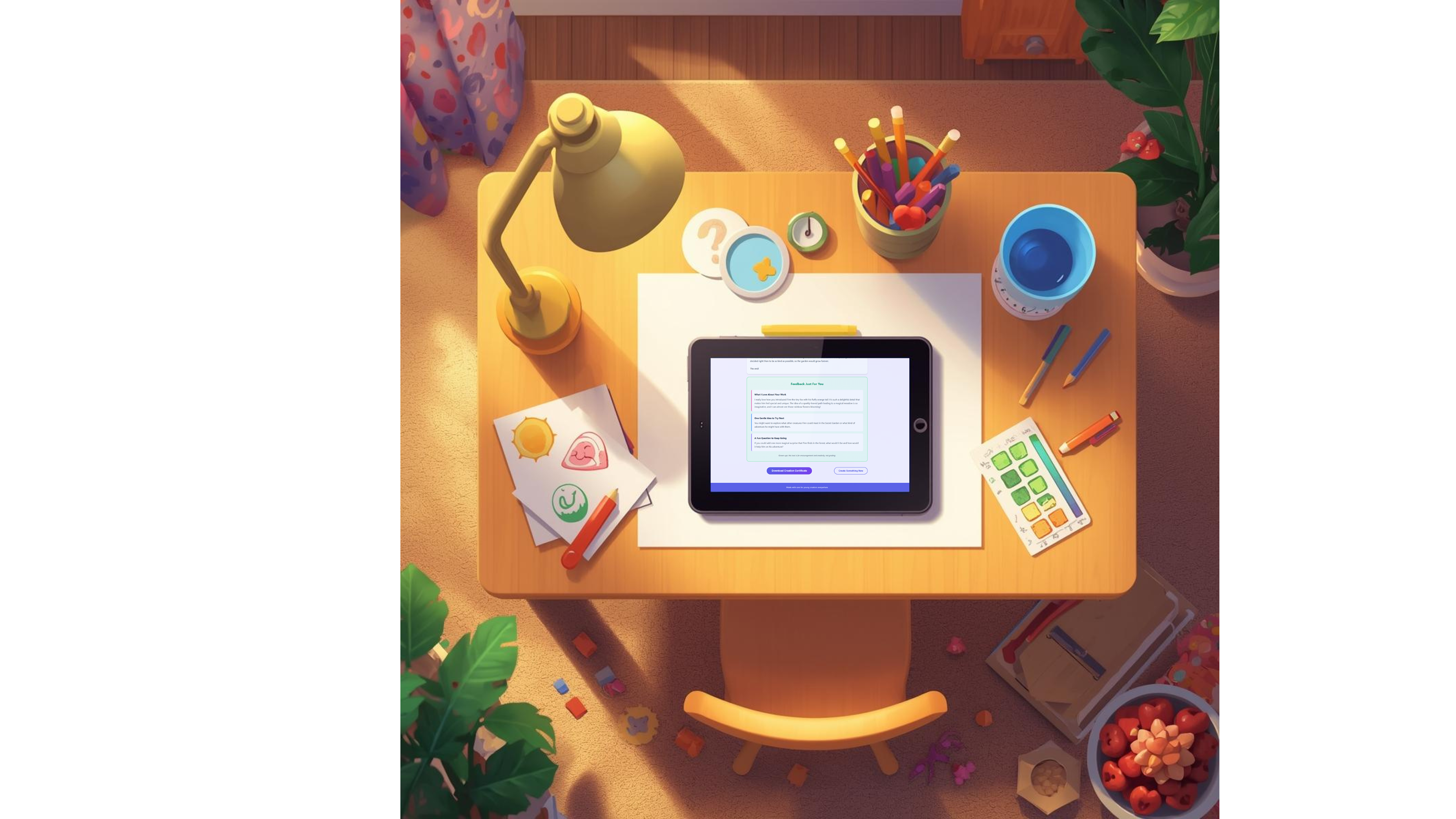
A second guiding principle was emotional safety. Every interaction, from prompt generation to feedback, was designed to support confidence and curiosity rather than correctness. Feedback needed to feel kind and affirming, highlighting effort and imagination while offering gentle suggestions that invite further thinking. The language throughout the app was intentionally chosen to avoid grading, ranking, or judgment, reinforcing the idea that learning and creativity are ongoing processes rather than tests.
Ethical use of AI was also a core design principle. The app was built to minimize data collection, avoid long term storage of user content, and clearly communicate privacy expectations to both children and adults. AI is used as a supportive tool rather than an authority, and its role is transparent and limited to encouragement and idea generation. This approach reflects my belief that technology should enhance human learning experiences without replacing educators, caregivers, or a child’s own voice.
Finally, accessibility and clarity guided both visual and interaction design decisions. The interface needed to be easy to navigate, readable, and approachable for a wide range of ages and abilities. Features such as simple layouts, clear instructions, and optional read aloud support were included to ensure that more children could engage meaningfully with the experience. Together, these goals and principles shaped Kids Creative Learning Lab into a learning tool centered on creativity, care, and responsible design.
The Solution
Kids Creative Learning Lab addresses these challenges by offering a creative learning experience that centers exploration, expression, and encouragement. The app provides age-appropriate writing prompts, art prompts, or combined prompts that invite children to imagine, create, and respond in ways that feel comfortable to them. Rather than requiring a single correct response, the prompts are intentionally open ended, allowing children to engage through writing, drawing, or both, depending on their interests and abilities.
Once a prompt is generated, children may choose to share their work by typing their writing, uploading artwork, or combining the two. This step is optional, reinforcing the idea that participation is voluntary and that creativity does not need to be completed or submitted to be valuable. When feedback is generated, it focuses on highlighting what is engaging or interesting about the work, offering one gentle idea for further exploration, and asking a curiosity driven question that encourages continued thinking rather than closure.
The experience avoids grades, scores, comparisons, and public sharing entirely. Instead, it emphasizes personal reflection and creative confidence, helping children see their ideas as worth exploring and expanding. By pairing thoughtful prompt design with supportive AI assisted feedback, Kids Creative Learning Lab offers a learning environment where creativity is nurtured, mistakes are safe, and exploration is encouraged without pressure.
Ethical and Accessibility Considerations
Ethical considerations were central to the design of Kids Creative Learning Lab, particularly because the tool is intended for use by children. From the outset, the app was designed to minimize data collection and avoid long term storage of user content. Children are not required to create accounts, and submissions are not retained beyond the immediate session. Clear reminders are provided to avoid sharing personal information, helping both children and adults understand how to use the tool safely and responsibly.
The role of AI within the app is intentionally limited and transparent. Rather than acting as an authority or evaluator, the AI is positioned as a supportive presence that encourages creativity and reflection. Feedback avoids judgment, scoring, or comparison, and instead emphasizes effort, imagination, and curiosity. This approach was chosen to reduce pressure and prevent the app from shaping a child’s sense of ability or self-worth around automated responses.
Accessibility was also a guiding consideration throughout the design process. The interface uses simple layouts, readable text, and clear instructions to support a wide range of ages and learning styles. Optional read aloud functionality was included to support emerging readers and children who benefit from auditory learning. These decisions reflect a broader commitment to inclusive design, ensuring that the app is approachable and usable for as many children as possible without requiring advanced reading skills or technical familiarity.
Together, these ethical and accessibility choices reinforce the app’s core purpose, creating a learning environment that feels safe, supportive, and respectful. Kids Creative Learning Lab was designed not only to encourage creativity, but also to model responsible and human centered use of AI in educational spaces.
What I Built
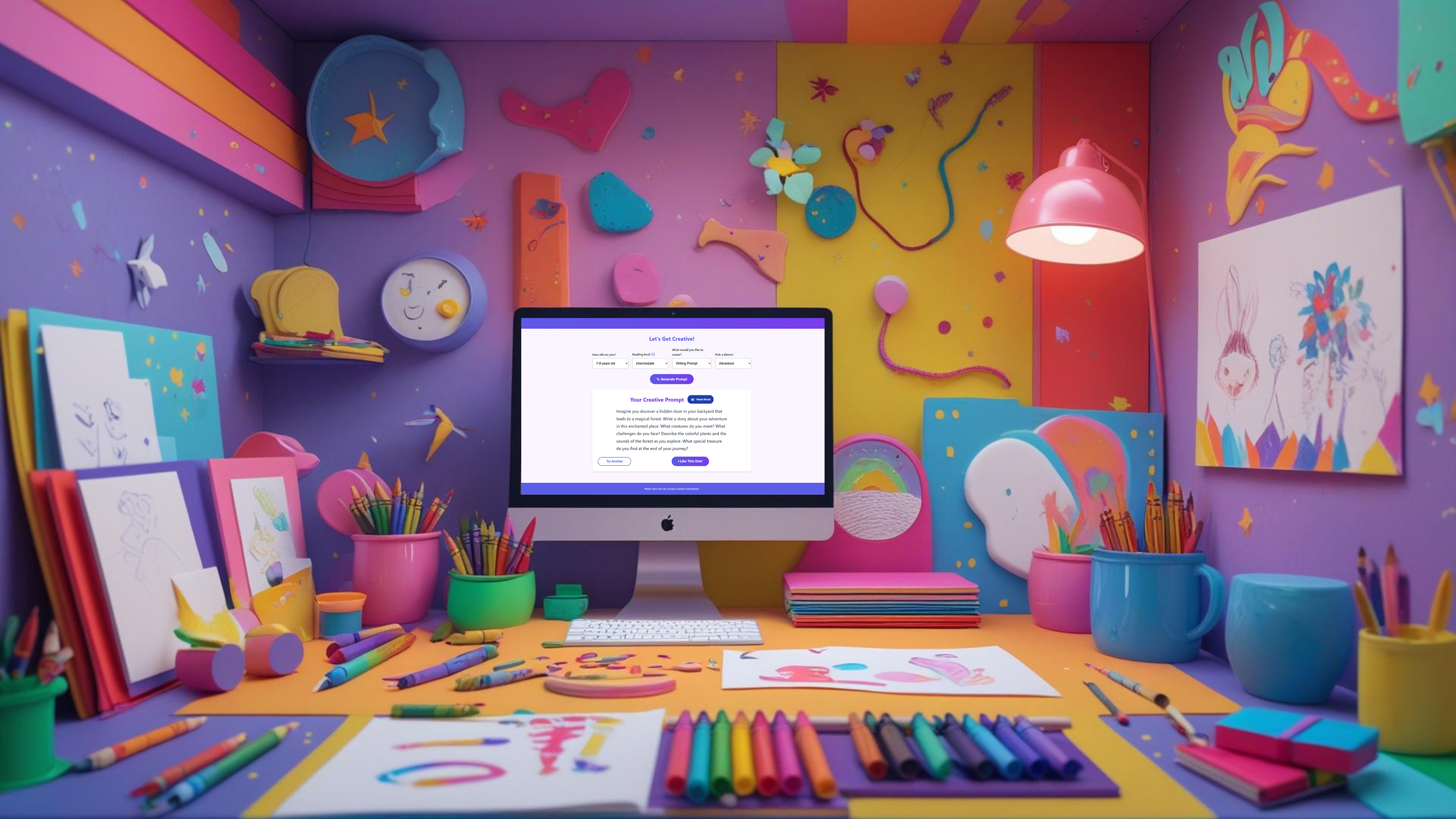
I designed and built the Kids Creative Learning Lab as a complete concept to MVP web application using Replit, focusing on delivering a full end to end experience rather than a collection of disconnected features. The app includes a prompt generation system that adapts to different age ranges, reading levels, and creative themes, allowing children to receive prompts that feel engaging and appropriate without being restrictive. This flexibility was important in supporting a wide range of creative expression and learning styles.
The application supports multiple ways for children to respond, including written text, uploaded artwork, or a combination of both. This multimodal approach allows children to engage creatively in ways that align with their strengths and preferences, particularly for visual learners or children who may struggle with traditional writing based tasks. The submission flow was intentionally designed to be optional and low pressure, reinforcing the idea that creativity does not require completion or evaluation.
I also implemented an AI assisted feedback system that returns supportive responses structured around appreciation, gentle suggestion, and curiosity. The feedback avoids grading or correction and is framed to encourage continued exploration rather than final answers. In addition, the app includes a downloadable creation certificate that allows children and caregivers to save or share work offline, providing a sense of completion without public comparison or data retention.
Throughout development, I prioritized clarity, privacy, and usability, ensuring that the app communicates expectations clearly and remains approachable for both children and adults. The result is a functional, ethical learning tool that demonstrates how AI can be integrated into creative education in a responsible and human centered way.
Current Status and Next Steps
Kids Creative Learning Lab is currently live as a functional MVP and is being intentionally left in its current state while I prepare to gather real world feedback. Rather than making assumptions about what should change or expand, my next focus is on observing how children, parents, and educators interact with the app, where they feel confident, where they hesitate, and which parts of the experience feel most meaningful. This approach reflects my preference for iterative design grounded in actual use rather than speculative feature additions.
In the near term, I plan to conduct informal usability testing with a small group of users, focusing on clarity of flow, emotional response to the prompts and feedback, and overall ease of use. Feedback from this phase will be used to identify targeted improvements, such as minor UX refinements or adjustments to prompt presentation, while preserving the core philosophy of encouragement first learning.
Longer term, this project serves as a foundation for continued exploration of ethical, creative, and human centered learning tools. Future iterations may include optional educator facing features, additional accessibility enhancements, or expanded creative modes, but any changes will remain aligned with the original goals of safety, privacy, and creative confidence. Kids Creative Learning Lab represents an ongoing commitment to building learning experiences that respect children as thinkers and creators, and to using technology in ways that support growth rather than measurement.